

Every agent’s output remains a suggestion until a consultant or DPO reviews and accepts it. Nothing an agent produces is committed to the system of record automatically.
Country to Law
Suggests which privacy laws apply to your organization based on the jurisdictions where it operates. When an administrator records a country or region in the Company Profile’s Global Footprint, the agent cross-references Dutro’s library of 20+ global privacy laws and proposes the ones likely to apply, so the Global Framework starts scoped to the right regulatory regime instead of the entire catalog.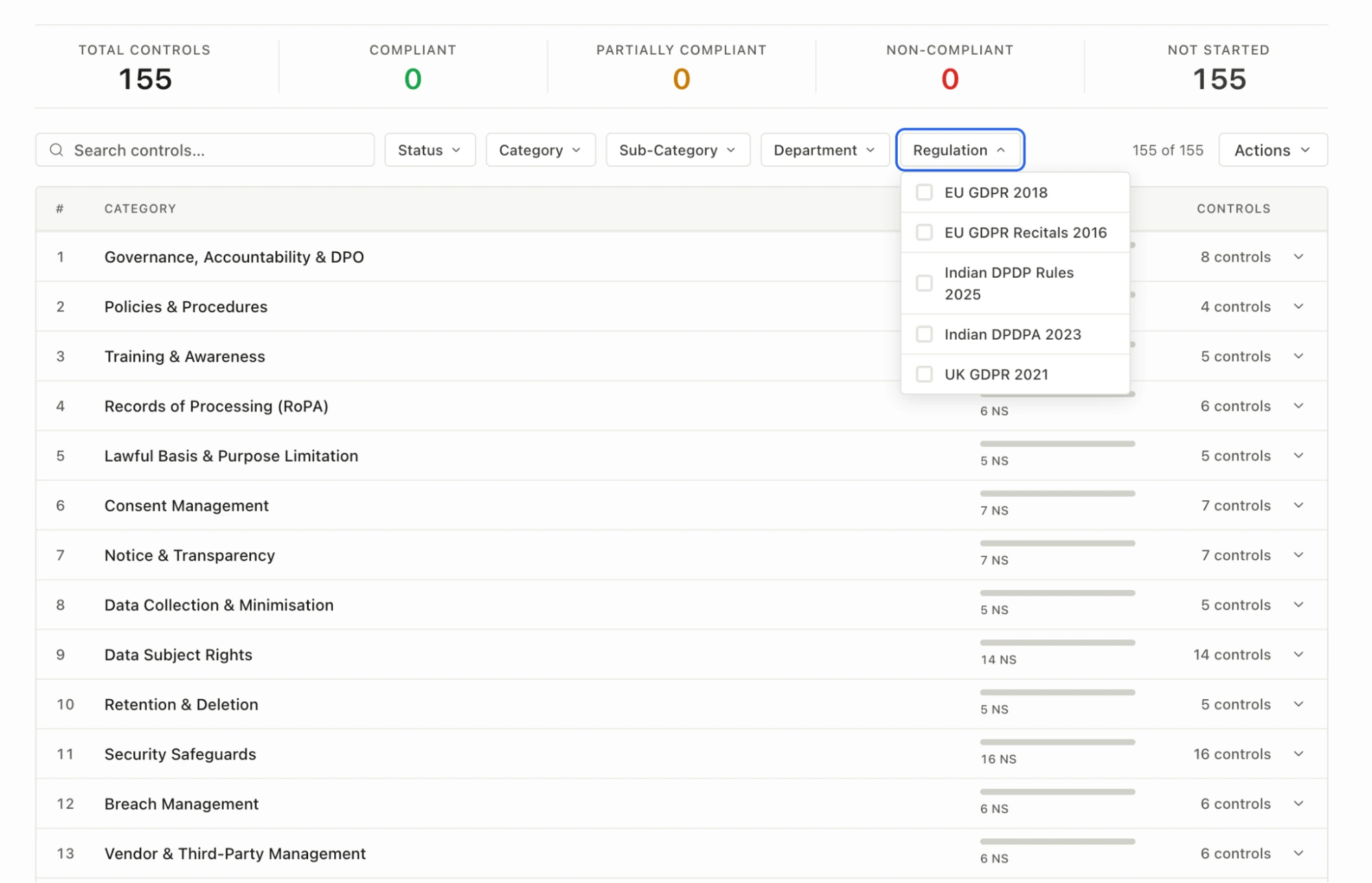
Control Framework & Jurisdiction Mapping, the view the Country to Law agent populates
Sector to Law
Layers industry-specific obligations on top of the base jurisdictional framework. Once a business model or industry sector, such as Financial Services or a sector handling special category data, is set in Company Profile, the agent adds the sector-specific controls and citations onto what the Country to Law agent already proposed.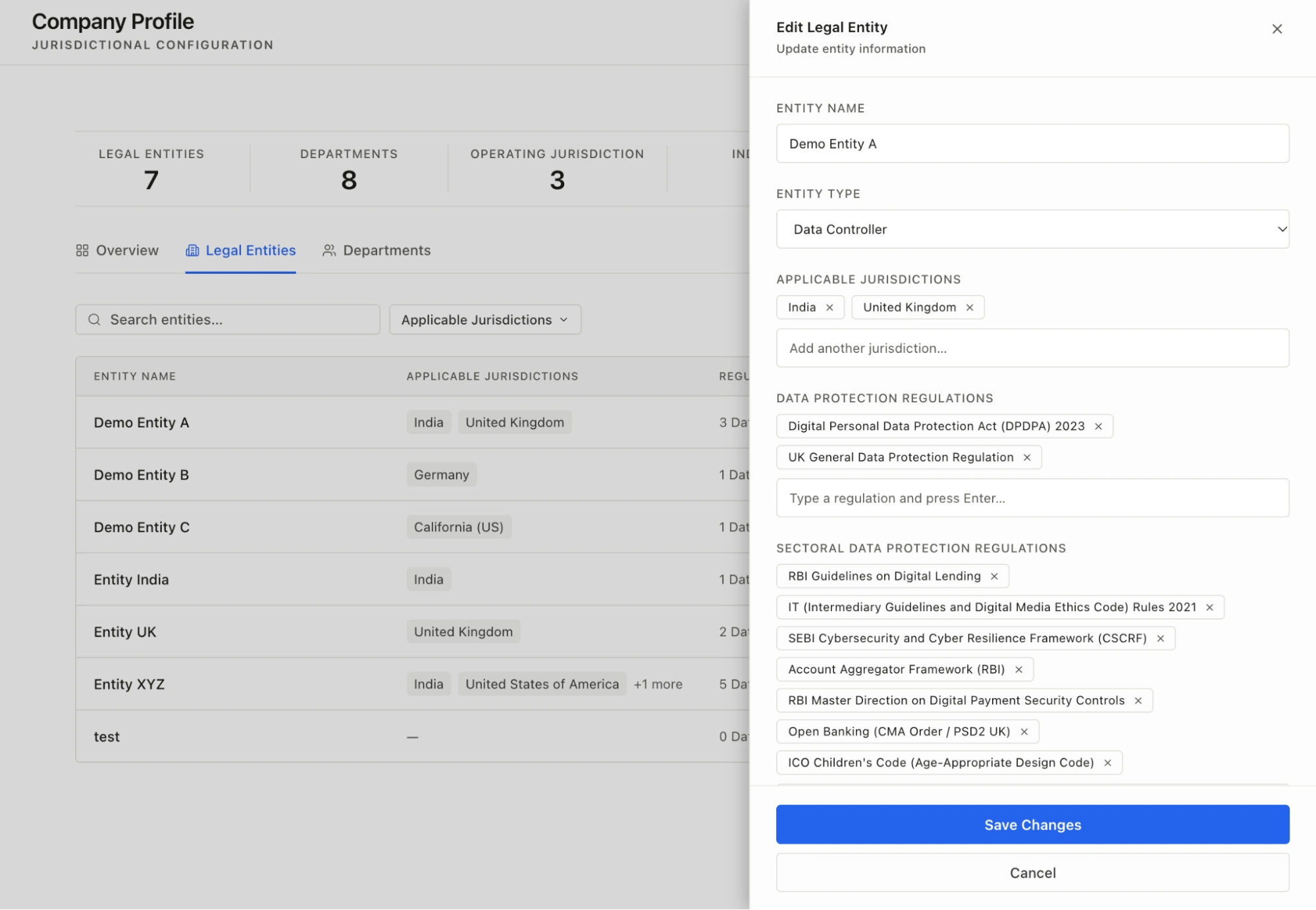
Cross-jurisdictional control mapping with sector-layered controls
Meeting Minutes
Turns a call transcript, or a short agenda and attendee list, into a structured, boardroom-ready Minutes of Meeting record. It drafts the agenda, key discussion points, and decisions for a department’s DPO review, producing a dated, named record that can be viewed, renamed, or downloaded later as part of the audit trail.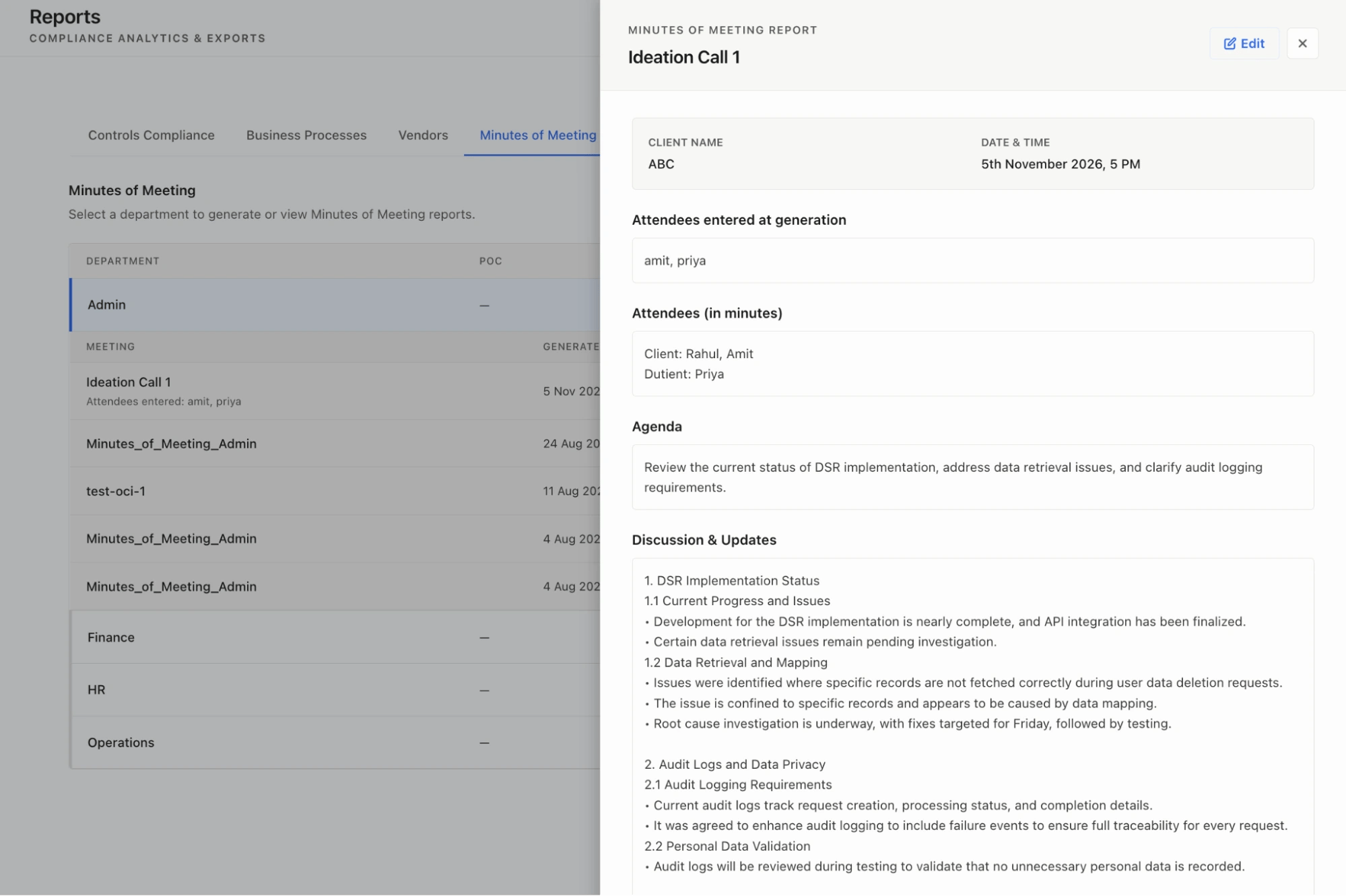
A generated Minutes of Meeting record
Questionnaires
Reads the answers a department enters in its Privacy Questionnaire and maps them to the Global Framework’s controls and any gaps they reveal. As a department works through its Department Overview questionnaire, the agent uses the responses, along with any question bank or custom questions added, to flag which controls are implicated and feed that context into the Control Mapping and Gap Analysis agents.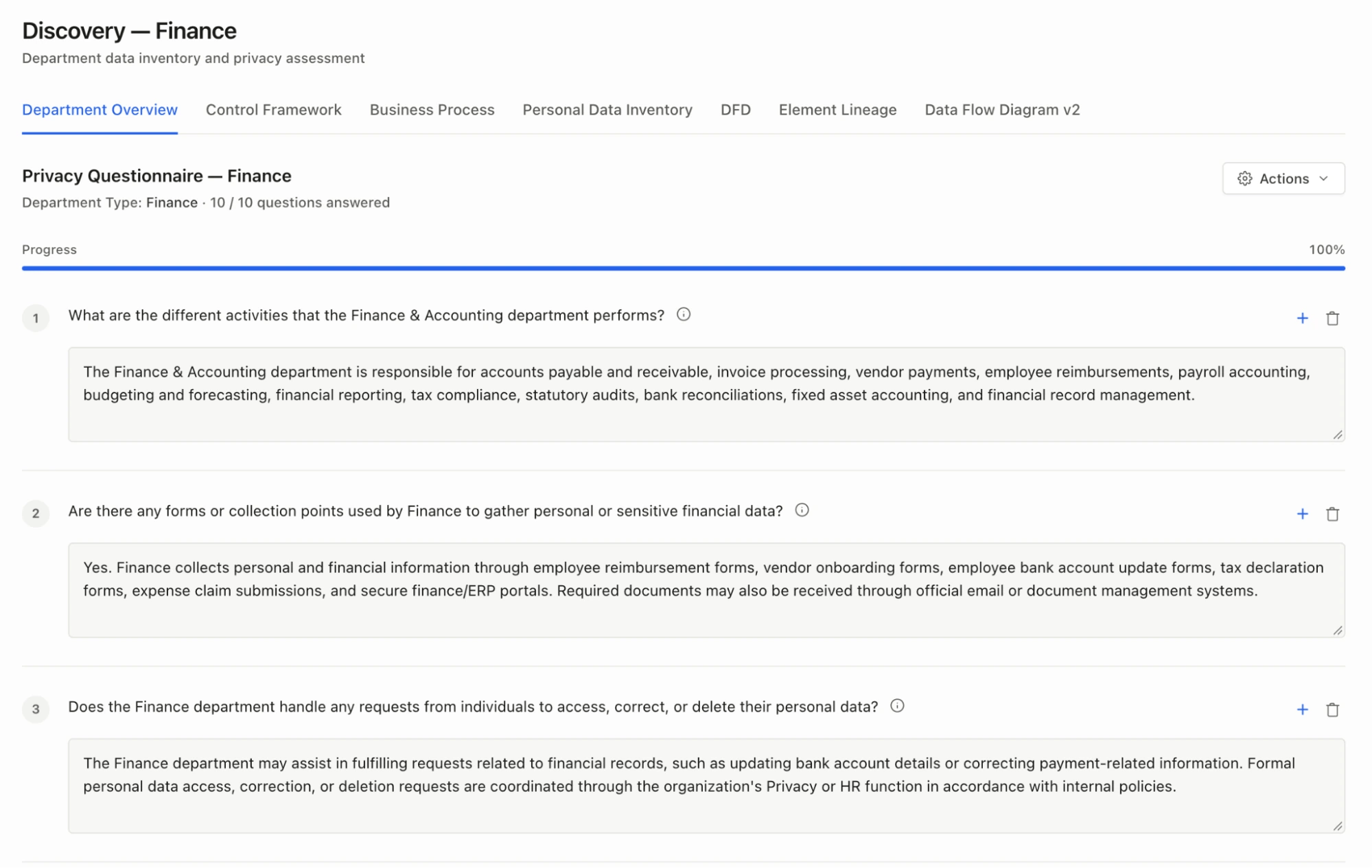
The Privacy Questionnaire the agent reads
Control Mapping
Evaluates a business process’s full context, including data categories, personal data elements, storage locations, transfers, and security measures, and maps it to the applicable controls across all 24 Global Framework domains, citing the verbatim statutory sections it relied on. A consultant or DPO reviews and accepts the suggested controls to commit them to the department’s framework.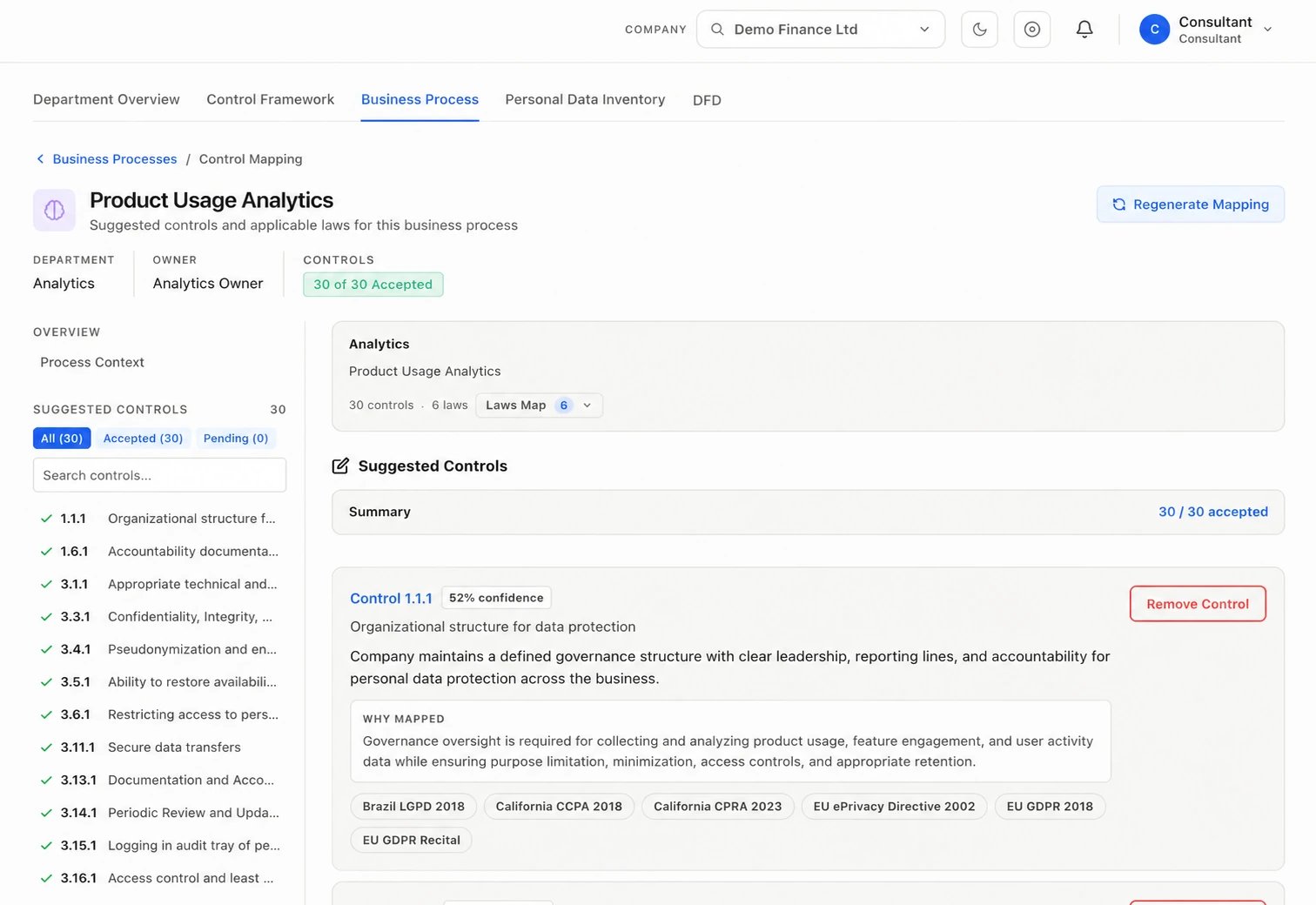
Control Mapping Agent results for a business process
Gap Analysis
Cross-references a business process’s data model and its accepted controls against the evidence uploaded in the Evidence Bank. It automatically identifies missing safeguards, such as missing DPAs, absent lawful bases, or undefined retention periods, assigns a severity rating to each one, and writes an executive summary before exporting the open deficiencies into the Gap Register.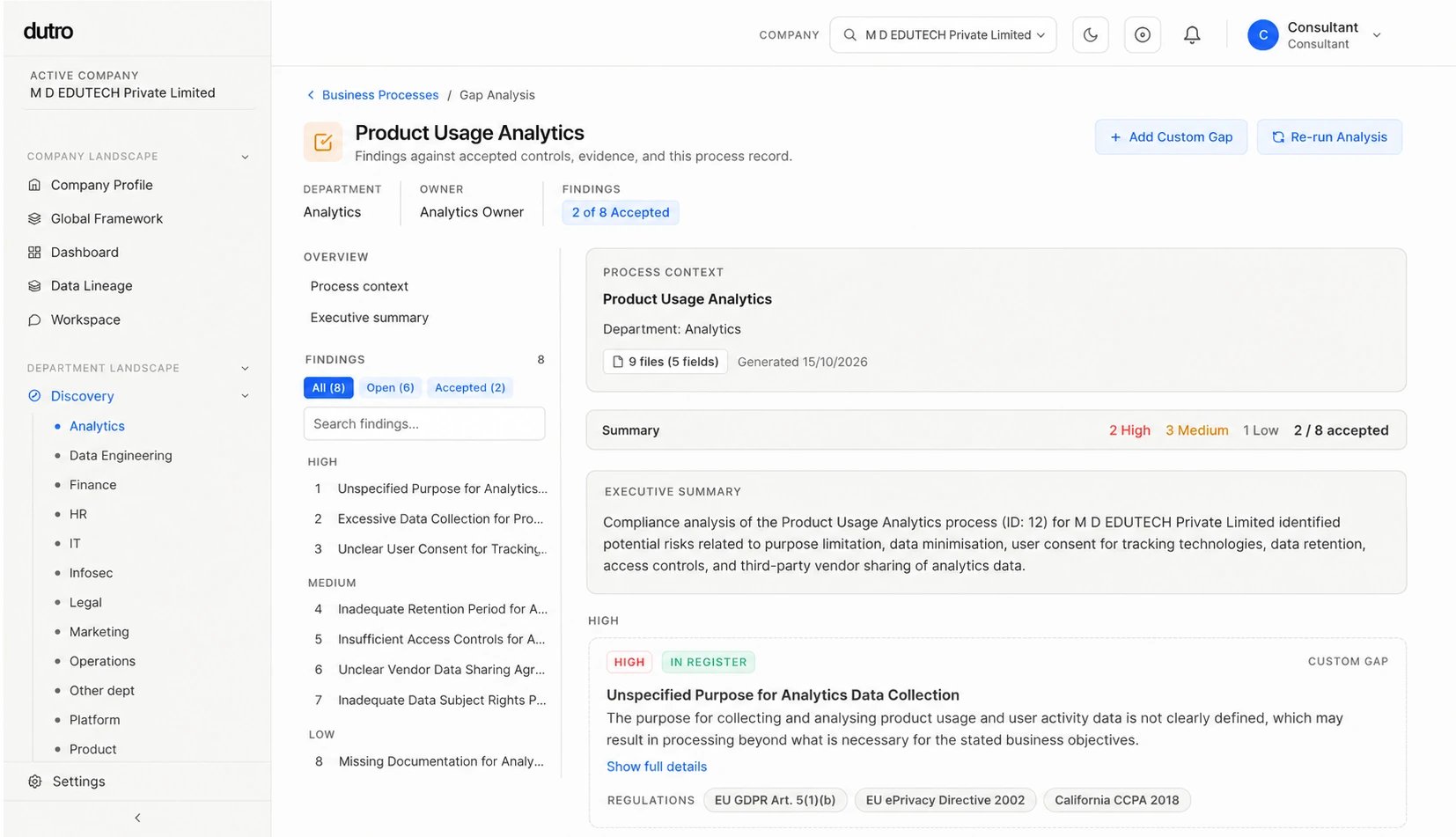
Gap Analysis Agent results for a business process
PIA Drafting
Runs an automated Privacy Impact Assessment (PIA/DPIA) in two phases:- Phase 1 screens the business process against 10–11 criteria to determine whether a full PIA is legally mandated.
- Phase 2 scores five material risk scenarios: Unauthorized Access, Unauthorized Modification, Data Disappearance, Function Creep, and Unregulated Cross-Border Transfers.
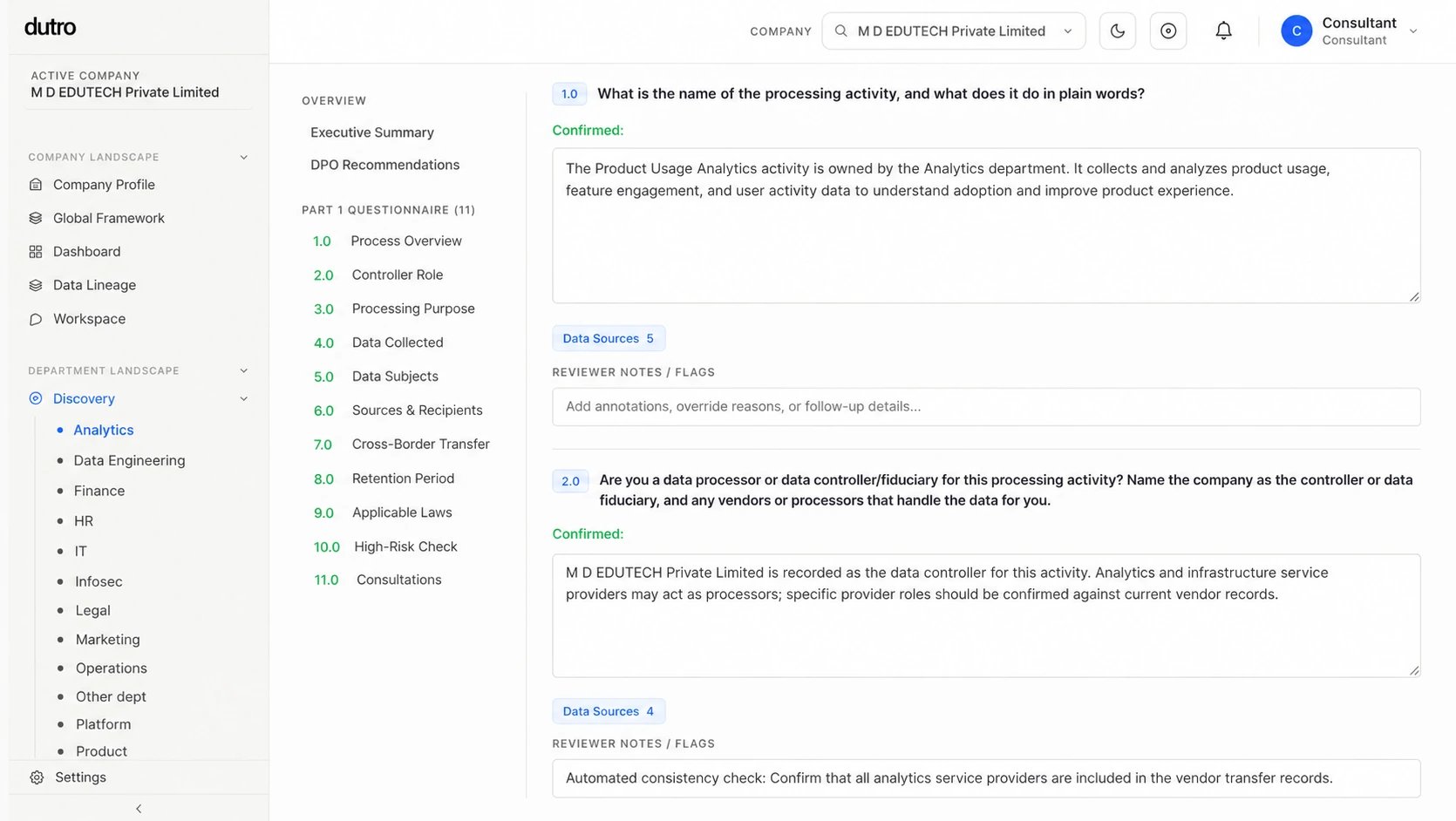
PIA Agent results for a business process
Risk Scoring
Calculates a numeric risk score for each item in the Risk Register from its likelihood and impact, and classifies it from Critical down to Low. Alongside the score, it flags the statutory penalty exposure tied to the relevant law, so a consultant can prioritize remediation by real regulatory consequence rather than by instinct.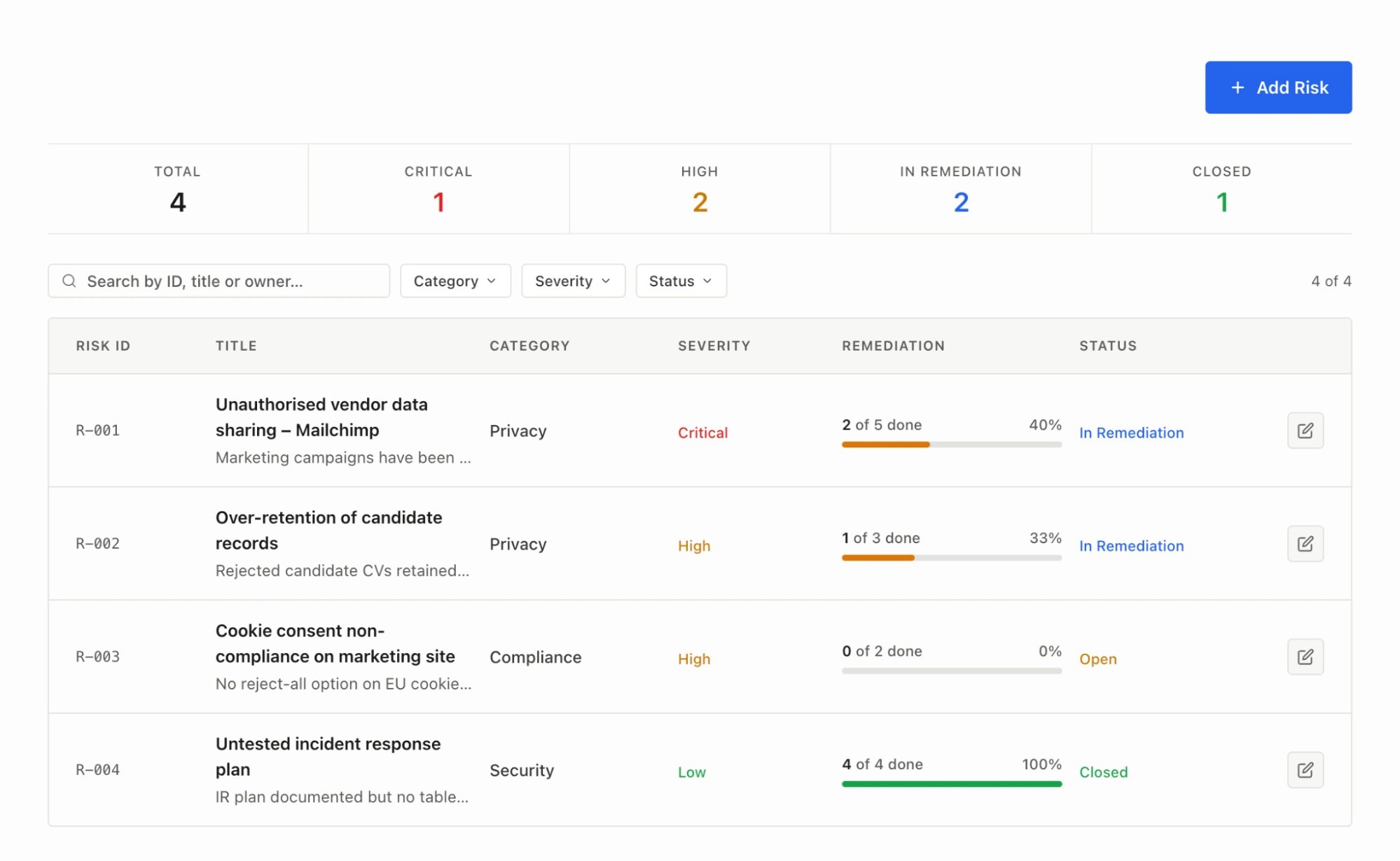
Risk scores with color-coded severity
Policy Generation
Drafts a privacy policy, notice, or other document from a short brief: the policy’s name, category, audience (internal or external-facing), tone, and the regulations it needs to satisfy. The draft arrives in the Policy Centre ready for review, versioning, and approval, rather than a blank page.Evidence Check
Verifies an uploaded piece of evidence and extracts details like its expiry date, so renewal tracking is automatic rather than manual. Every file lands in the Evidence Bank with a Pending Verification status until a reviewer confirms it, and the agent’s extracted expiry date drives the Expiring Soon and Expired counters.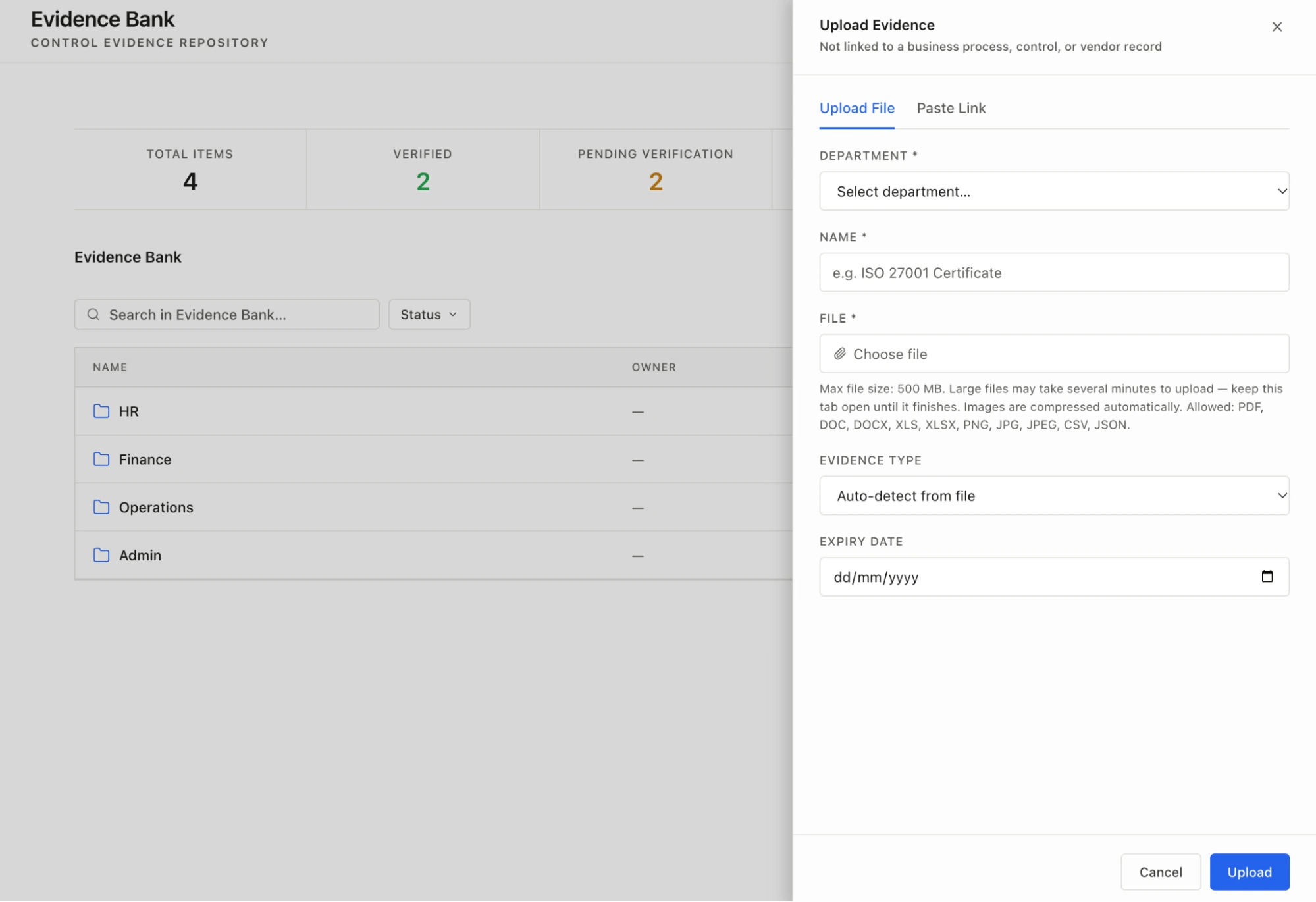
Uploading evidence, where the Evidence Check agent reads the file
Ask Dutro
A standing question-and-answer assistant that draws on the company’s own compliance data and Dutro’s Regulatory Intelligence library to answer questions on control status, law applicability, and recent regulatory changes. It is the same kind of question-answering that the Dutro MCP server makes available for this user guide itself.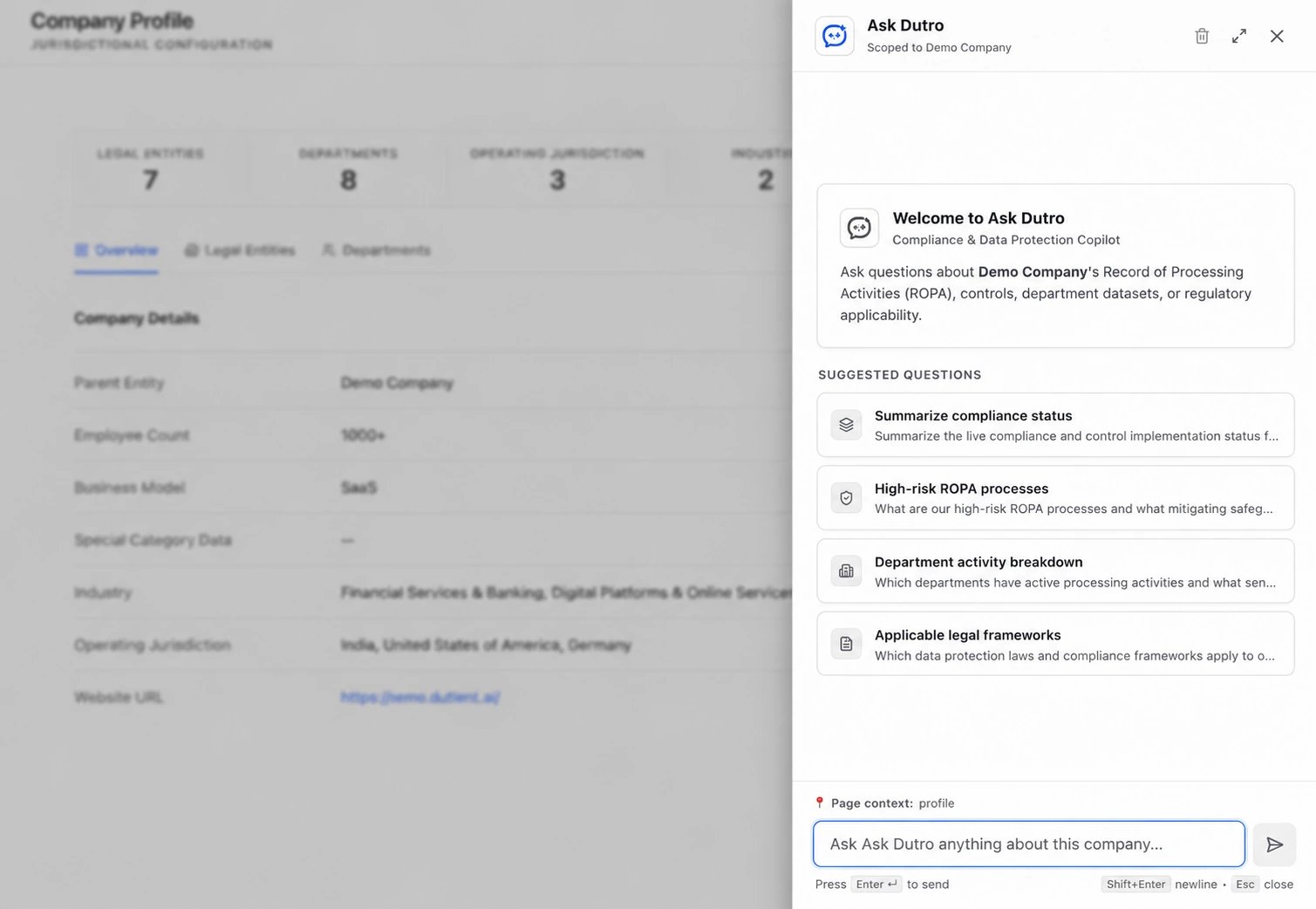
The Ask Dutro assistant